Reconstruction: The Long Road to Creating Things That Matter
A while back, I got a letter after a CT scan.
Something showed up on my lungs. That is still about as glamorous as it sounds.
I am not turning this into a medical drama. I am not announcing a revelation from the heavens. I am saying one simple thing: getting a letter like that has a way of cutting through bullshit fast.
It reminds you life can pivot in an afternoon.
It reminds you that time is not theoretical.
It reminds you that if you are going to spend your energy building something, it better not be hollow.
That letter did not make me want to be safer.
It made me want to waste less time.
Less time on work that means nothing.
Less time on polished nonsense.
Less time on projects designed to look respectable while saying absolutely nothing.
If I am going to pour myself into this next chapter, then I want to build work with a pulse.
That is where reconstruction comes in.
Reconstruction Is Not a Cute Word
People love a neat comeback story.
They love the version where something bad happens, the music swells, and then ten minutes later the hero is back on her feet with perfect hair and a meaningful smile.
Real reconstruction is uglier than that.
It is slower.
It is more repetitive.
It is more boring, honestly.
It asks more of you than inspiration ever will.
Reconstruction is physical.
Reconstruction is spiritual.
Reconstruction is professional.
It is not one big movie moment. It is a thousand small decisions made while nobody is clapping.
The Bike
After the car accident, one of the strangest and most humbling parts of recovery was relearning how to ride a bike.
Not metaphorically at first. Literally.
You would think riding a bike is one of those things your body just remembers forever. Cute saying. Nice sentiment. Sometimes your body remembers. Sometimes it remembers fear first.
So there I was, dealing with that long road back in a way that felt almost insulting in its simplicity:
A bike.
Balance.
Start again.
That process became bigger than the bike pretty damn quickly.
Because that is what reconstruction feels like.
You get on.
You wobble.
You panic.
You overcorrect.
You stop.
You try again.
And again.
And again.
There is nothing glamorous about rebuilding trust in your own body. There is nothing glamorous about realizing confidence does not magically reappear because you would really like it to. There is nothing glamorous about progress that is measurable mostly in inches.
But there is something true about it.
Relearning how to ride a bike after the car accident became one of the clearest metaphors for the life I am building now. Not just physically, but spiritually and professionally too.
You do not become new by pretending the damage never happened.
You rebuild.
Piece by piece.
Movement by movement.
Choice by choice.
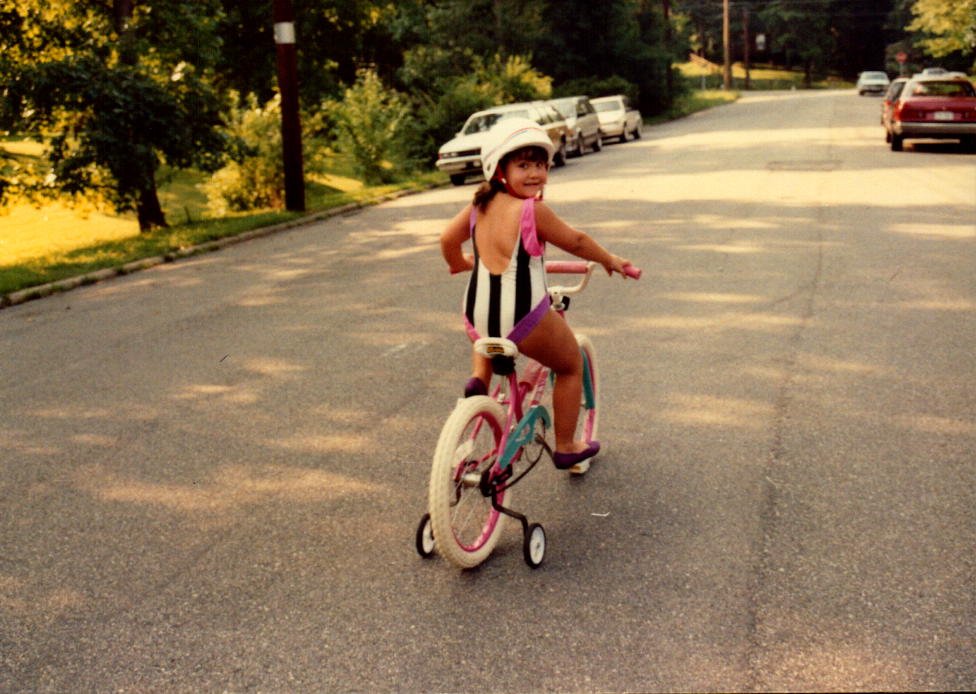
Relearning to ride my bike after my childhood car accident
The Work Has to Matter Now
That is the center of Lou Dog Studio.
Not aesthetics for their own sake.
Not content for content’s sake.
Not a bunch of empty noise dressed up as ambition.
Lou Dog Studio is a publishing company, yes, but that phrase can sound way too clean for what I actually mean. This studio is about independent publishing in the messier, more human sense. It is about building stories, worlds, audio, experiments, mysteries, and experiences that actually leave a mark.
The mission is simple:
> Create Things That Matter.
That line is not branding wallpaper to me. It is a standard.
It means I am not interested in safe work just because safe work is easier to explain.
It means I am not interested in chasing bland approval.
It means the book publishing process is not just about making an object and getting it online. It is about making something honest enough to deserve a place in someone’s life.
That also affects the practical side of the job. I care about craft. I care about story. I care about structure. And yes, I care about visibility too, because if you are working in independent publishing, you cannot ignore the mechanics. You learn the production side. You learn the release side. You learn the weird, frustrating world of book marketing strategies without letting it swallow the soul of the work.
That balancing act is part of reconstruction too.
July 8 and the Physical Weight of a Book
On July 8, physical copies of Good Slave arrived.
That matters in a way that is hard to explain unless you have ever spent years dragging a book through your own life before finally being able to hold it in your hands.
A manuscript is one thing.
A finished book is another.
At some point the work stops being a document on a screen and becomes an actual object in the room with you. You can lift it. You can set it down on a table. You can look at it and think, holy shit, this is real now.
That moment is not the end of anything, obviously. If anything, it is the beginning of a different phase of the work. But it does carry a kind of weight, literally and emotionally.
It says:
This survived the process.
This made it here.
Now keep going.
Briar Glen and Building a Bigger World
The same reconstruction is happening with The Briar Glen Mysteries.
Briar Glen is becoming what it was always supposed to become: a darker, richer Appalachian noir mystery world built for adults.
That evolution matters to me because I am no longer interested in sanding the edges off what the story wants to be. I want the setting to feel lived in. I want the secrets to feel old. I want the town to feel like it has been keeping score for years.
I want the work to have weather in it.
That is true creatively, but it is also true from a studio standpoint. Lou Dog Studio is not just trying to publish isolated titles. I am building a world people can step into and not want to leave. Books are part of it. Audio is part of it. digital experiences are part of it. Investigation, atmosphere, and immersion are part of it.
That is a bigger vision than simply releasing a book and hoping the algorithm has a nice day.
And yes, building something like that means learning in public. It means wrestling with the creative side, the technical side, the production side, and the marketing side all at once. It means understanding story while also understanding timing, rollout, audience, and all the unsexy logistics that make the thing real.
That is the actual work.
Reconstruction as a Business Model, a Creative Practice, and a Life
What I am doing now in Waynesville is not separate from what I have survived. It is built out of it.
Not in a motivational poster way.
In a labor way.
In a bruise-and-repetition way.
In a get-back-on-the-bike way.
Reconstruction has become the clearest word I have for this season because it covers more than healing. Healing can sound passive, like you lie there long enough and eventually the universe handles it.
Reconstruction is active.
You choose materials.
You clear debris.
You figure out what still stands.
You decide what gets rebuilt and what gets left the hell behind.
That is true in a body.
That is true in a creative life.
That is true in business.
Lou Dog Studio exists because I do not want to spend the years I have making things that are easy, forgettable, or safe. A letter about your lungs will clarify that. So will an accident. So will the slow, stubborn act of learning to trust yourself again.
Especially that last one.
The Long Road Back Is Still a Road
I do not think reconstruction ever feels finished in some grand, cinematic sense.
I think it feels more like this:
You keep going.
You keep building.
You keep making the next honest thing.
Sometimes that thing is a memoir.
Sometimes it is the arrival of physical books on July 8 and the weird shock of seeing your own work stacked in front of you.
Sometimes it is the slow build of an Appalachian noir mystery world like The Briar Glen Mysteries.
Sometimes it is learning the guts of the book publishing process and the realities of book marketing strategies because nobody else is coming to magically do it for you.
Sometimes it is getting back on a bike and realizing the road back is longer than you wanted, but still worth taking.
That is where I am.
Still rebuilding.
Still learning.
Still making.
And more certain than ever that if Lou Dog Studio is going to exist, it needs to exist for a reason.
Create Things That Matter.
That is the mission.
That is the reconstruction.
That is the road.